
Melbourne: City Histories
Margaret Anderson and Ann Wilcox
Melbourne is one of the world’s most admired and vibrant modern cities. A lively multicultural population relishes its attractive waterfront, tree-lined streets and relaxed spaces for eating and socialising. Yet the city has also seen hardship and industrial decline, Gold Rush boom and architectural splendour, poverty and dispossession, all reflected in its remarkable cultural and economic legacy.
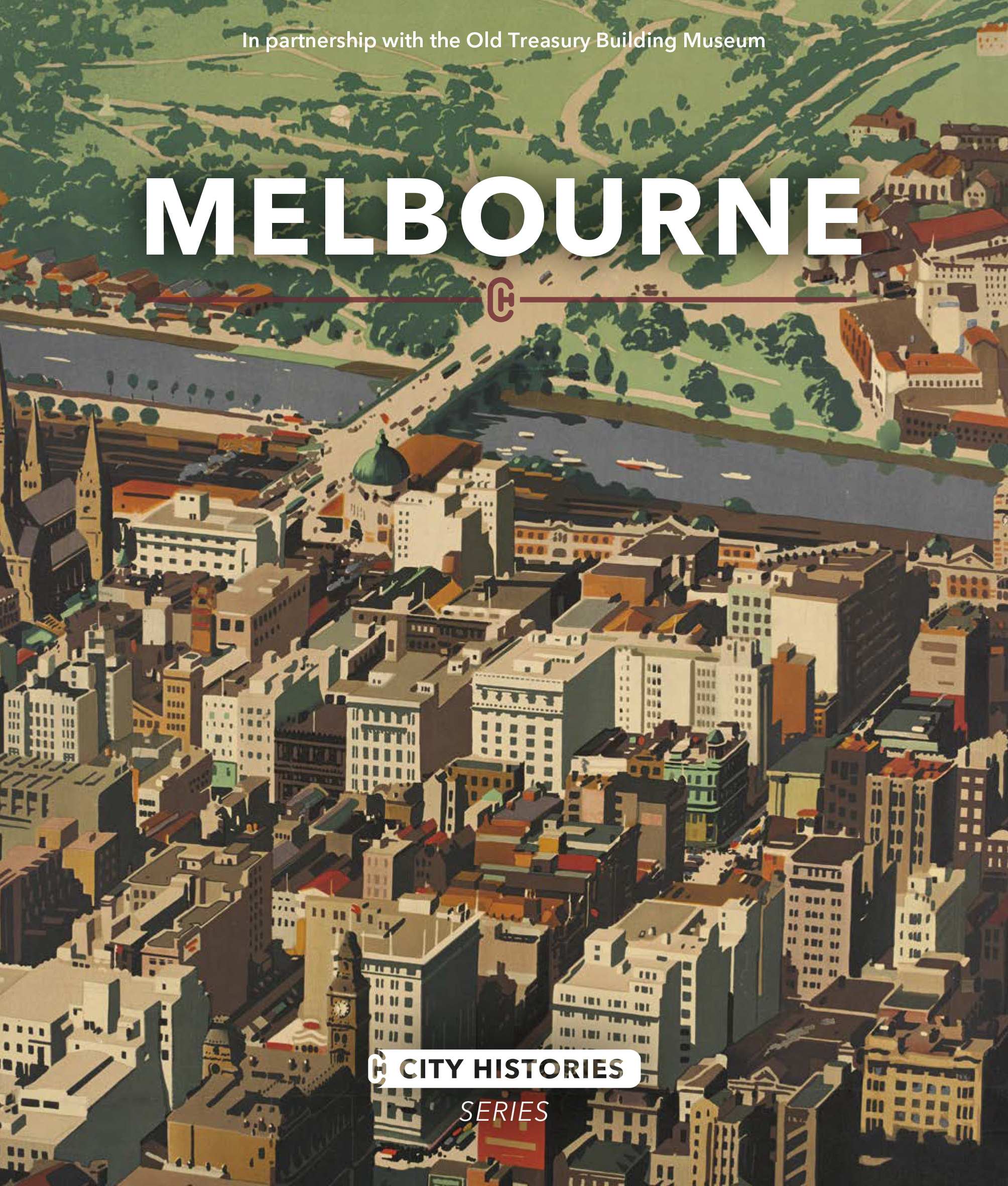
City Histories: Melbourne offers an engaging, lavishly illustrated introduction to this dynamic city. It explores the long occupation of the land around present-day Melbourne/Naarm by the people of the Kulin Nation, revealing the devastating impact of their dispossession by European arrivals. Later chapters trace the extraordinarily rapid growth of Melbourne through the 1840s, the Gold Rush decades and the 1880s, when the city became known as ‘Marvellous Melbourne’. It then considers the volatile twentieth century, from two world wars and global depression to the ‘long boom’ that attracted migrants from around the world.
City Histories profiles a city based on the collections held at an institution within it – the guardians of a city’s story, telling its origins, history, lives of its people through the unique lens of its collections.
Margaret Anderson is director of the Old Treasury Building in Melbourne. Her scholarly publications include articles on women’s history, the history and demography of the family, aspects of the history of Victoria and the practice of public history. She has also co-written three popular histories with Ann Wilcox – Melbourne: Foundations of a City (2021), Yarra: Stories of Melbourne’s River (2021) and Lost Jobs: The Changing World of Work (2022).
Ann Wilcox is curator at the Old Treasury Building Museum in Melbourne. She has curated over 20 social history exhibitions (some award-winning) and has written extensively on Victoria’s past. Ann has specialised in Australian social history. Her research interests include the history of early Melbourne, the Victorian Gold Rush and Australian urban history.
Gallery:


ISBN:
978-1-83636-038-4
Format:
200 x 170mm
Binding:
Paperback
Page extent:
64
Language editions:
English
Price:
£12.95 / $17.95